
Горячая линия
1388xx888xx
Горячая линия
1388xx888xx

Свяжитесь с нами
Адрес:206, 208, 210, 211, Building D, Yabian Community Yabian Xueziwei Industrial Park, Shajing Street, Shenzhen, Guangdong, China
Почтовый ящик:1388xx888xx@gmail.com
Мобильные телефоны:1388xx888xx
Телефон:1388xx888xx
Текущее местоположение:Главная страница> Информационный центр> Многосеточная технология секрет эффективности солнечных панелей
Добавить время:2025-12-28
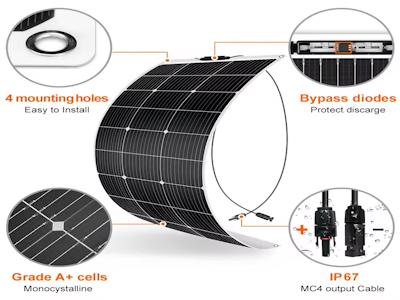
В современном мире, где энергетические потребности растут экспоненциально, а экологические проблемы становятся все более острыми, солнечная энергия представляет собой один из наиболее перспективных источников возобновляемой энергии. Солнечные панели, или фотоэлектрические модули, преобразуют солнечный свет в электричество, но их эффективность долгое время оставалась ограниченной. Однако, с развитием технологий, многосеточная технология (multi-junction technology) emerged как революционное решение, способное значительно повысить КПД солнечных панелей. В этой статье мы подробно рассмотрим, что такое многосеточная технология, как она работает, её преимущества, вызовы и будущее в контексте глобальной энергетики.
Солнечная энергия, получаемая от солнца, является практически неисчерпаемым ресурсом. По данным Международного энергетического агентства (МЭА), солнечная энергетика может покрыть до 20% мирового спроса на электроэнергию к 2050 году, если текущие темпы развития сохранятся. Однако, традиционные солнечные панели на основе кремния имеют ограниченную эффективность, typically ranging from 15% to 22%. Это означает, что большая часть солнечного света не преобразуется в электричество, а теряется в виде тепла или отражения. Такой низкий КПД делает солнечную энергию менее конкурентоспособной по сравнению с ископаемыми топливами, особенно в регионах с высокой стоимостью земли или недостаточным солнечным излучением.
Вызовы солнечной энергетики включают не только низкую эффективность, но и высокую стоимость производства, зависимость от погодных условий, и необходимость больших площадей для установки панелей. Чтобы преодолеть эти ограничения, researchers and engineers have been exploring advanced materials and designs. Одним из наиболее promising approaches является многосеточная технология, которая позволяет solar cells capture a broader spectrum of sunlight, thereby increasing overall efficiency.
Многосеточная технология, также известная как multi-junction technology, involves stacking multiple layers of semiconductor materials in a single solar cell. Each layer is designed to absorb a specific part of the solar spectrum. For example, one layer might be optimized for visible light, another for infrared, and a third for ultraviolet radiation. By combining these layers, the cell can convert more photons into electrons, resulting in higher efficiency compared to single-junction cells.
The concept of multi-junction cells dates back to the 1980s, initially developed for space applications where efficiency is critical due to limited space and high costs. Over time, advancements in materials science, such as the use of gallium arsenide (GaAs), indium gallium phosphide (InGaP), and other III-V compounds, have made multi-junction cells more accessible for terrestrial use. Today, these cells can achieve efficiencies exceeding 40% in laboratory settings, and commercial versions are steadily improving.
Key components of a multi-junction cell include the substrate, which is often germanium or silicon, and the epitaxially grown layers that form the junctions. Each junction has a different band gap energy, allowing it to absorb light at specific wavelengths. The cells are connected in series or parallel to optimize voltage and current output. This design not only boosts efficiency but also enhances performance under varying light conditions, such as low light or direct sunlight.
To understand how multi-junction technology works, it's essential to recall the basics of photovoltaic conversion. When sunlight hits a solar cell, photons with energy greater than the band gap of the semiconductor material can excite electrons, creating electron-hole pairs. These pairs are separated by an electric field within the cell, generating a current. In a single-junction cell, only photons with energy above the band gap are absorbed, and higher-energy photons lose excess energy as heat.
In a multi-junction cell, the stacked layers have progressively lower band gaps from top to bottom. The top layer, with the highest band gap, absorbs high-energy photons (e.g., ultraviolet and blue light). The middle layer absorbs medium-energy photons (e.g., green and yellow light), and the bottom layer absorbs low-energy photons (e.g., red and infrared light). This cascading effect ensures that more of the solar spectrum is utilized, minimizing energy losses.
For instance, a typical triple-junction cell might consist of InGaP for the top junction (band gap ~1.9 eV), GaAs for the middle junction (band gap ~1.4 eV), and Ge for the bottom junction (band gap ~0.7 eV). When sunlight passes through, each junction generates current based on the photons it absorbs. The total current is limited by the junction with the lowest current output, so careful design is needed to match the currents of each layer. This is achieved through material selection and thickness optimization.
Additionally, anti-reflection coatings and texturing are used to reduce reflection losses and increase light absorption. The cells are often integrated with concentrator systems, such as lenses or mirrors, to focus sunlight onto a small area, further boosting efficiency by increasing the photon flux. This makes multi-junction cells ideal for concentrated photovoltaic (CPV) applications, where they can achieve record-breaking efficiencies.
The primary advantage of multi-junction technology is its high efficiency. Laboratory cells have demonstrated efficiencies over 47%, significantly outperforming traditional silicon cells. This means that for the same amount of sunlight, multi-junction panels can generate more electricity, reducing the number of panels needed and the overall footprint of solar installations. This is particularly beneficial in space-constrained environments, such as rooftops or urban areas.
Another key benefit is improved performance under real-world conditions. Multi-junction cells are less sensitive to temperature variations and spectral changes compared to silicon cells. For example, on a cloudy day or during sunrise/sunset, when the solar spectrum shifts towards red and infrared, the bottom junctions can still capture energy, maintaining higher output. This leads to more consistent energy production throughout the day and year.
Moreover, multi-junction technology enables the use of advanced materials that are more durable and have longer lifetimes. III-V compounds, such as GaAs, are highly resistant to radiation and degradation, making them ideal for harsh environments, including space and desert regions. This longevity translates to lower maintenance costs and a better return on investment over the system's lifespan.
From an environmental perspective, higher efficiency means that less land and resources are required to generate the same amount of energy, reducing the ecological footprint of solar farms. Additionally, as the technology matures, economies of scale could drive down costs, making solar energy more affordable and accessible globally.
Despite its advantages, multi-junction technology faces several challenges that hinder widespread adoption. The most significant barrier is cost. The materials used, such as gallium and indium, are expensive and relatively rare compared to silicon. The manufacturing process is complex, involving precise epitaxial growth techniques like metalorganic chemical vapor deposition (MOCVD), which requires high temperatures and cleanroom conditions. This makes multi-junction cells much more costly to produce than silicon cells, often by a factor of 10 or more.
Another limitation is the current mismatch between junctions. As mentioned earlier, the overall current is limited by the junction with the lowest output, so imperfect matching can reduce efficiency. Researchers are addressing this through advanced modeling and material engineering, but it remains a technical hurdle.
Additionally, multi-junction cells are typically used in concentrator systems, which require tracking mechanisms to follow the sun's movement. These systems add complexity and cost, and they may not be suitable for all applications, such as residential rooftops where simplicity is preferred.
There are also concerns about the sustainability of raw materials. Gallium and indium are byproducts of other mining processes, and their supply could be constrained if demand surges. Recycling and alternative materials, such as perovskites, are being explored to mitigate these issues.
Finally, the technology is still evolving, and large-scale commercialization is in its early stages. While efficiency records are impressive, real-world performance in diverse climates needs further validation. Standardization and certification processes are also needed to ensure reliability and safety.
Multi-junction technology is already making an impact in several areas. In space exploration, it is the standard for satellites and spacecraft due to its high efficiency and radiation resistance. For example, the Mars rovers use multi-junction cells to power their missions in the harsh Martian environment.
On Earth, concentrated photovoltaic (CPV) systems are the primary application. These systems use lenses or mirrors to concentrate sunlight onto small multi-junction cells, achieving efficiencies up to 40% in commercial installations. CPV plants are deployed in sunny regions like the southwestern United States, Spain, and the Middle East, where they contribute to grid-scale solar power.
Another emerging application is in tandem solar cells, where multi-junction layers are combined with perovskite or silicon cells to create hybrid devices. These tandems can leverage the strengths of both technologies, potentially reaching efficiencies above 30% at lower costs. Companies like First Solar and researchers at institutions like NREL are actively developing such solutions.
In the consumer market, multi-junction technology is found in high-efficiency solar panels for niche applications, such as military equipment, remote sensors, and portable chargers. As costs decrease, it could expand into residential and commercial sectors, especially in areas with high electricity prices or limited space.
Case studies show promising results. For instance, a CPV plant in Arizona reported a capacity factor of over 30%, compared to around 20% for traditional solar farms, demonstrating the technology's potential for higher energy yield.
The future of multi-junction technology looks bright, driven by ongoing research and innovation. Key trends include the development of four-junction and five-junction cells, which aim to capture an even broader spectrum and push efficiencies beyond 50%. Materials science advancements, such as the use of nanowires and quantum dots, could further enhance light absorption and reduce costs.
Integration with energy storage systems, like batteries, will be crucial for maximizing the benefits of high-efficiency solar panels. Smart grids and digital technologies can optimize the deployment of multi-junction systems, ensuring they operate at peak performance.
Cost reduction is a major focus. Efforts are underway to develop cheaper deposition methods, such as sputtering or solution-based processes, and to use more abundant materials. Silicon-based multi-junction cells are also being explored to combine high efficiency with low cost.
In the long term, multi-junction technology could play a pivotal role in achieving global renewable energy targets. As part of a diversified energy mix, it can help decarbonize the power sector and combat climate change. Policy support, such as subsidies and R&D funding, will be essential to accelerate adoption.
Ultimately, the secret to effective solar panels lies not just in one technology but in a holistic approach that includes efficiency improvements, cost reductions, and system integration. Multi-junction technology is a key piece of this puzzle, offering a path to a more sustainable and energy-secure future.
В заключение, многосеточная технология представляет собой прорыв в повышении эффективности солнечных панелей. Путем использования multiple layers для поглощения различных частей солнечного спектра, она significantly увеличивает КПД и улучшает производительность в реальных условиях. Несмотря на challenges, такие как высокая стоимость и сложность производства, ongoing innovations и scaling efforts promise to make this technology more accessible. As the world transitions to renewable energy, multi-junction cells will undoubtedly play a crucial role in maximizing the potential of solar power, contributing to a cleaner and more sustainable planet.
Investing in research and development, supporting policies, and fostering collaboration between industry and academia will be key to unlocking the full potential of multi-junction technology. With continued progress, we can look forward to a future where solar energy is not only abundant but also highly efficient and affordable for all.
Название компании:Shenzhen Shine Solar Co., Ltd. Адрес:206, 208, 210, 211, Building D, Yabian Community Yabian Xueziwei Industrial Park, Shajing Street, Shenzhen, Guangdong, China Контактные лица:Shawn Телефон:1388xx888xx Мобильные телефоны:1388xx888xx